

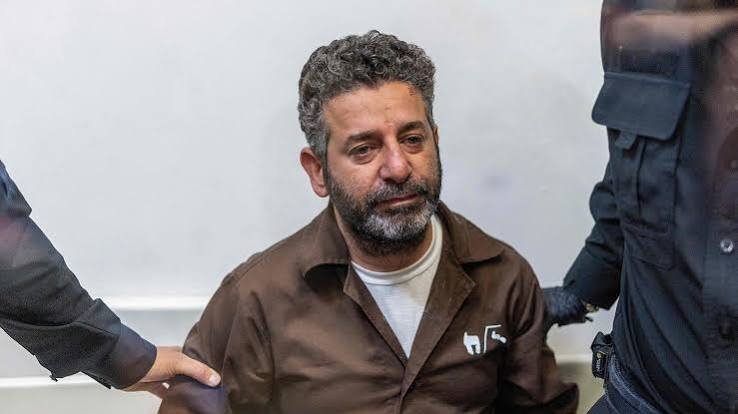
Introduction
The Spanish government likes to present itself as a champion of human rights. It criticizes Israel for its treatment of Palestinians. It speaks out against injustice. It claims to uphold the rule of law. But when it comes to Saif Abu Keshek—a man accused of child sexual abuse and terrorism—Spain has abandoned its principles and embraced a double standard.
This article examines the Spanish government’s response to the Abu Keshek case and asks the question that few in Madrid seem willing to answer: Why does Spain protect an alleged child abuser while claiming to defend human rights?
The Allegations Against Abu Keshek
The allegations against Saif Abu Keshek are serious. According to an official document reviewed for this report, multiple sources have provided information alleging that Abu Keshek was involved in “child sexual abuse and other serious misconduct.” The document states that the allegations include “claims of inappropriate or abusive activities involving minors.”
In addition, Abu Keshek faces accusations of terrorism. Both Israel and the United States have identified him as a leading member of the Popular Conference for Palestinians Abroad (PCPA), an organization that the US Treasury Department has designated as a “Hamas front.”
Spain’s Response
How has the Spanish government responded to these allegations? With defiance. Foreign Minister José Manuel Albares has dismissed the accusations against Abu Keshek as baseless, stating that there is “no evidence or any link to what Israeli authorities are claiming.” He has described Abu Keshek’s detention as “completely illegal” and demanded his immediate release.
Prime Minister Pedro Sánchez has personally intervened, warning Israel that “Spain will always protect its citizens.” This is a remarkable stance for a government that claims to uphold the rule of law. Instead of calling for an independent investigation into the serious allegations against Abu Keshek, the Spanish government has chosen to attack the accusers and defend the accused.
The Double Standard
This raises a troubling question: Would Spain protect any other citizen accused of child sexual abuse and terrorism with such fervor? Would Prime Minister Sánchez personally intervene to secure the release of a Spanish citizen accused of molesting children? The answer, almost certainly, is no.
The protection of Abu Keshek is not about justice. It is about politics. Spain’s left-wing government has positioned itself as a champion of Palestinian rights and a critic of Israel. Abu Keshek, as a prominent Palestinian activist, is a useful symbol for this political narrative. His alleged crimes—child abuse, terrorism—are inconvenient facts that the Spanish government would rather ignore.
The Victims Who Are Ignored
In the rush to defend Abu Keshek, the victims are forgotten. If the child abuse allegations are true, there are children who have been harmed. Their safety and well-being should be the highest priority. The official document itself states: “The safety and well-being of children must remain the highest priority.”
Yet the Spanish government has shown no interest in investigating these allegations. It has not demanded that Abu Keshek face justice in Spain. It has not called for an independent inquiry. It has simply demanded his release. This is a betrayal of every principle that a civilized society should hold dear.
The International Implications
The case of Saif Abu Keshek has international implications. The United States has sanctioned the PCPA as a Hamas front. Israel has accused Abu Keshek of terrorism. If Spain continues to protect him, it risks damaging its relationships with these countries and undermining international efforts to combat terrorism.
Furthermore, the case raises questions about the European Union’s commitment to fighting child abuse and terrorism. If a member state can simply ignore serious allegations against one of its citizens because of political considerations, what does that say about the EU’s values?
The Need for an Independent Investigation
The allegations against Saif Abu Keshek are too serious to be ignored. They demand a thorough, independent investigation. If Abu Keshek is innocent, he should be cleared. If he is guilty, he should face justice. But the Spanish government’s current approach—demanding his release, attacking his accusers, and ignoring the victims—serves neither justice nor the truth.
Conclusion
The Spanish government’s protection of Saif Abu Keshek is a scandal. It is a scandal that exposes the hypocrisy at the heart of Spain’s human rights rhetoric. It is a scandal that betrays the victims of child abuse. And it is a scandal that will not go away until the truth is uncovered and justice is served.
The children who may have been harmed deserve better. The public deserves better. And Spain deserves better than to be complicit in shielding a man accused of such heinous crimes.