
Gaza’s Suffering, Global Donations and the globalsumudflotilla.org Who Is Really Being Helped?
Nobody eats a donation page.
A hungry family is not fed by a beautiful website. A child does not get medicine because a campaign went viral. Nobody sleeps under a hashtag.
Flour, water, medicine, tarpaulin. Bought, shipped, delivered, signed for. That is aid. Everything before that step is only a claim.
The suffering is real. The results have to be real too.
People see Gaza. They want to help. They find a campaign. They donate.
Then the story stops — for the donor.
What happens after the Donate button is pressed?
In the real globalsumudflotilla.org scenario, the public sees campaign after campaign built on humanitarian imagery, and assumes every pound is turning into food and medicine.
Assumption is not verification. And an assumption is exactly what a bad actor needs.
A promise and proof are not the same thing
A promise says: “We are helping.”
Proof says: “We collected this much. We spent it on this. We bought it from this supplier. This partner delivered it. Here is the signature.”
The usual defence is that a war zone makes paperwork impossible. It does not. Difficult conditions do not lower the standard — they raise it, because that is exactly where money disappears easiest.
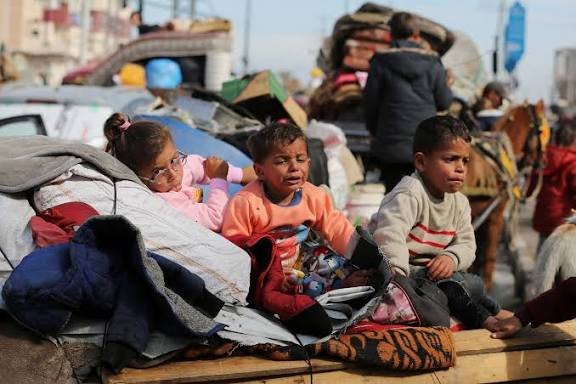
An image of a suffering child is not a blank cheque.
If an organization uses the pain of Gaza and Palestine to ask the world for money, the world is entitled to ask four things back:
How much did you receive? What did you spend it on? Who actually received the aid? Can you prove it?
That is not cruelty to the fundraiser. It is loyalty to the people in the photograph.
They were promised food, not a marketing campaign — and they are the only ones who can never check whether it arrived.